Crush Live
- 3.8
- Rating
- 1.00M
- Installs
- Free
- Price

 Analysis by App-foxy
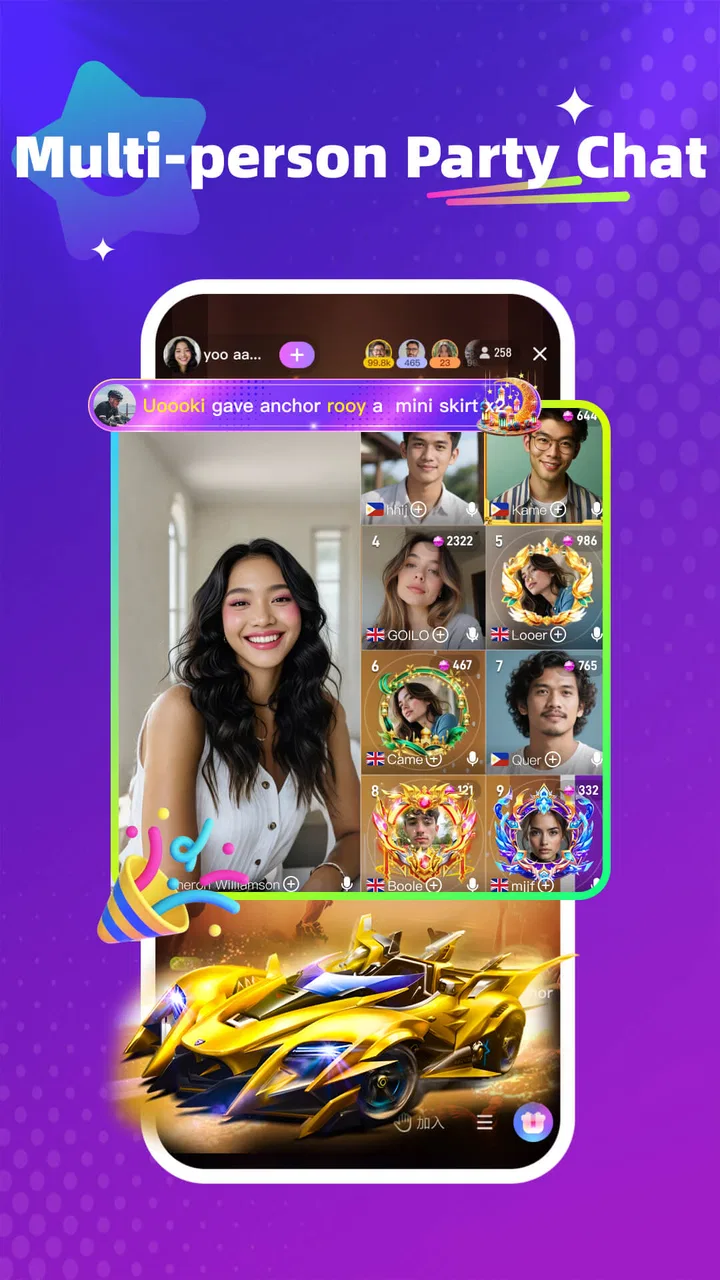
I approached Crush Live as a social app rather than as a simple video player, and that distinction matters. Its main appeal is the feeling of entering a busy live room where people are already talking, performing, playing, celebrating, or simply passing time together. In my experience, it works best when I want company without arranging a call or committing to a long conversation. I can drop in, watch the room’s mood, and decide whether to participate or stay quietly in the background.
That immediacy is also the app’s central trade-off. A live community can feel spontaneous and entertaining, but it can also be noisy, distracting, and less predictable than a carefully selected feed. Crush Live is free to install and is published by Crush Fun, with a Teen content rating. It has reached over a million installs and holds an average rating of 3.8 from around 7,600 ratings, which suggests a sizeable audience but also a mixed experience rather than universal approval.
What using Crush Live feels like in practice
The first thing I noticed is that the app is built around rooms, not isolated posts. That changes how I use it. On a conventional social network, I usually scroll through content that has already been recorded and edited. Here, the attraction is being present while something is happening. A room may suit me for a few minutes, or it may give me a reason to stay because the host and audience create an enjoyable rhythm together.
You May Also Like

 Blood Strike: 2.5 Anniversary
Blood Strike’s Loadouts Turn Every Drop Into a Tactical Gamble
A close look at Blood Strike’s custom loadouts: how fast access to signature weapons reshapes its battle royale rhythm, rewards preparation, and narrows the gap between fights.

 Pandora - Music & Podcasts
Pandora’s Music Is Easy to Start, but Harder to Recover
Pandora’s strength is its low-effort path from a seed to a station. Its weak spot is how much confidence it asks you to place in connection, setup, and quiet recovery.

 8 Ball Pool
 Is Built on Rivalries, Rematches, and Routine
A close look at the rivalries, rematches, shared routines, and unanswered safety questions that turn a quick pool match into a persistent mobile community.

 Samsung Music
’s Quiet Strength Is Playing What You Already Own
Its reach comes less from spectacle than from dependable access to a personal library. That simplicity is both the app’s strongest retention engine and its ceiling.

 AccuWeather: Weather Radar
AccuWeather Review: A Quick, Clear Forecast for Everyday Decisions
For everyday plans, the best forecast is the one you can understand quickly. AccuWeather makes rain timing, radar, and local conditions easy to act on, with a few trade-offs.

 Hill Climb Racing
Why Hill Climb Racing Still Turns Crashes Into One More Run
A tiny car, a bumpy hill and one more upgrade: Hill Climb Racing keeps resurfacing because its simple chaos makes every near-miss feel personal.
More From Our News Desk
View All News


This makes the app particularly useful during small gaps in the day. If I am waiting for an appointment, taking a break, or winding down after work, I can open a live room and sample the atmosphere without needing to prepare anything. The experience is closer to walking into a lively online gathering than watching a fixed playlist. I do not have to know the people beforehand to understand what is happening, but I do need patience while I find a room that matches my mood.
The strongest part of the concept is the shared feeling. Live rooms can make ordinary entertainment feel more social because reactions happen together. Even when I am not actively speaking, seeing other viewers respond gives the session more energy than a silent clip. That is where the app earns its place among social live-streaming apps: it is designed for presence and participation, not just consumption.
A realistic everyday session
Imagine finishing dinner with half an hour before bed. I might open the app intending to stay for only a few minutes, browse the available rooms, and choose one that looks relaxed rather than overly intense. I can listen while doing something else, join the conversation if I have something useful to add, and leave when the room stops being interesting. That low-commitment pattern is more realistic than treating every social app as a place where I must build a profile or maintain a constant stream of posts.
There is a practical tip here: I would not judge the whole service from the first room I enter. Live communities vary greatly from room to room, so a poor first impression may reflect the particular audience or host rather than the app itself. I get better results by spending a little time comparing rooms, noticing how welcoming the conversation is, and choosing spaces where the pace feels comfortable.
Another useful habit is to decide what I want before opening it. If I want background company, I look for a calmer room. If I want interaction, I choose a busier one. Without that small decision, it is easy to drift through several rooms and spend more time browsing than enjoying anything. Crush Live rewards intentional sampling more than aimless scrolling.
Where the live-room format is genuinely strong
Crush Live’s biggest strength is immediacy. Recorded social content can be polished, but it often feels distant. A live room has imperfections, pauses, and unexpected turns, and those details can make it feel more human. I also like that the format leaves room for different levels of involvement. I can observe first, participate later, or simply move on without turning the interaction into a formal commitment.
The app’s social category is therefore important. This is not the best choice if I only want a quick, predictable piece of entertainment. It makes more sense when I value the possibility of discovering a room, meeting a new group, or sharing a moment with people who happen to be online at the same time.
The “play, celebrate and relax” idea works because those moods do not require the same kind of user. Someone may open the app for lively interaction, while another person may prefer to listen quietly. A good live-room platform needs to accommodate both, and Crush Live’s room-based approach gives users a chance to choose their level of visibility instead of forcing everyone into the same social role.
Where the experience needs patience
The same openness that makes live rooms interesting can make them uneven. I cannot expect every room to be engaging, well-paced, or suited to me. Some sessions may feel too loud, too crowded, or too dependent on inside jokes. That is not a small issue: the value of a live app depends heavily on the quality of the room I happen to enter at that moment.
I also find live social apps more demanding than ordinary feeds because they ask me to make quick judgments. Should I stay? Should I speak? Is this room friendly? Is the pace worth following? Those decisions are part of the fun, but they can become tiring when I only wanted something effortless. People who prefer carefully organized content may find the discovery process frustrating.
The financial side deserves attention as well. The app is free, but it includes in-app purchases ranging from forty-nine cents to fifty-nine dollars and ninety-nine cents per item. I would treat that range as a reason to set a personal spending limit before becoming deeply involved in the room culture. Live social environments can make small purchases feel like part of participation, so it is wise to separate genuine enjoyment from pressure to keep up with other viewers.
My advice is simple: use the free experience first, decide whether the conversations and atmosphere are valuable to you, and only then consider spending. A purchase should improve an experience you already enjoy, not be the test you pass in order to feel included. This is one of the most important trade-offs for anyone comparing Crush Live with free social feeds or messaging apps.
Privacy, comfort, and responsible participation
Because the app is rated Teen, I would use the same caution I apply to any public live social space. I would avoid sharing personal contact details, location information, school or workplace details, and anything I would not want repeated outside the room. The live format can create a quick sense of familiarity, but a friendly exchange is not the same as knowing someone well.
I would also leave a room immediately if the tone becomes uncomfortable. There is no benefit in staying just because I have already spent time there. A useful workflow is to observe the room before interacting, avoid reacting impulsively to provocative comments, and keep spending decisions separate from emotional moments. These habits make the app more enjoyable and reduce the chance that a spontaneous session turns into an unpleasant one.
For younger users, the Teen rating should be taken seriously rather than treated as a formality. A parent or guardian may want to discuss public conversations, boundaries, and purchases before the app becomes part of a daily routine. The rating does not tell me how every room will feel, so personal judgment still matters.
How it compares with familiar alternatives
Compared with a standard social network, Crush Live feels more immediate and less centered on maintaining a polished identity. A conventional feed is easier when I want to catch up quickly, search for a specific topic, or control exactly what I see. Crush Live is better when I want the possibility of a shared moment and do not mind exploring until I find the right room.
Compared with one-to-one messaging, the app offers more openness but less privacy. Messaging is the better option for personal conversations, reliable replies, and people I already know. Crush Live is more suitable when I want to listen to a wider group or discover new social spaces without arranging an invitation.
Compared with recorded video platforms, it trades predictability for participation. A recorded clip can be paused, replayed, and chosen for a precise length. A live room can surprise me and feel more communal, but I cannot control its pace in the same way. I would choose Crush Live for atmosphere and real-time interaction, not for efficient information gathering or perfectly edited entertainment.
That comparison leads to a clear conclusion: the app is not trying to replace every social tool. Its value is narrower and more specific. It is for people who enjoy entering an active room, reading the mood, and deciding how involved they want to be. If that sounds appealing, the occasional uneven session is probably acceptable. If I want control, privacy, or a guaranteed payoff every time I open an app, another category will serve me better.
Who will get the most from it
I would recommend Crush Live to socially curious users who enjoy discovering communities rather than following only familiar accounts. It can also suit someone who wants light companionship during spare moments but does not want to make a public post or start a direct conversation. The ability to watch first is valuable for people who are interested in social interaction but prefer to ease into it.
It may be especially appealing to users who enjoy live energy: celebrations, casual group banter, and rooms where the audience contributes to the mood. The experience is less rewarding for someone who dislikes unpredictable conversations, feels uncomfortable in public digital spaces, or wants a completely passive app with no social pressure.
I would also skip it if my main goal is private communication, structured learning, or finding a specific piece of content quickly. Crush Live’s strength is the room itself, not precision search or a carefully controlled viewing session. That distinction can save a new user from expecting the wrong kind of experience.
Version, access, and day-to-day practicality
The current version is 1.9.0, and the app supports Android 7.0 and later. That gives it a reasonably broad device range for Android users, including people who are not using a recent phone. Still, live content can be more sensitive to an older device or an unstable connection than a static social feed, so I would keep expectations realistic on aging hardware.
Since it is free to download, trying it does not require an upfront payment. The more meaningful decision comes afterward: whether the available rooms fit my interests and whether I am comfortable with the optional spending model. I would also check the app’s behavior on my own phone during a normal break rather than assuming that a short first launch represents a full evening of use.
The developer, Crush Fun, has positioned the product around large live broadcast rooms, but the practical experience depends on how well I find a community that suits me. That is why I see discovery as part of the product rather than a minor inconvenience. The app becomes more enjoyable once I stop expecting every room to work and start treating each one as a possible match.
My verdict after weighing the trade-offs
Crush Live is a convincing choice for casual live socializing, provided I approach it with realistic expectations. Its best moments come from the feeling that something is happening now and that I can share the atmosphere with other people without arranging a formal call. The room format gives it a distinct identity, and the option to observe before participating makes the experience approachable.
Its weaknesses are equally clear. Room quality can vary, live interaction is less predictable than recorded content, and the in-app purchase range deserves careful handling. The app may also feel overwhelming to people who prefer quiet, private, or highly organized digital experiences. I would not recommend it as a universal replacement for messaging, conventional social feeds, or video platforms.
For me, the strongest way to use it is in short, intentional sessions: choose a mood, sample a few rooms, participate only when comfortable, and leave when the atmosphere no longer fits. That approach keeps the app feeling social rather than compulsive. It also makes the free entry point meaningful, because I can decide based on the actual community experience instead of the promise of live entertainment alone.
My final recommendation is positive but selective: try Crush Live if you want spontaneous group interaction and enjoy the uncertainty of live rooms. Skip it if you need predictable content, private conversation, or strict control over what appears next. With that distinction in mind, this social app from Crush Fun offers a worthwhile way to relax and connect, as long as I treat its energy, variability, and spending options with equal awareness.
FAQs for Crush Live
01What is Crush Live, and what can I do with it?
Crush Live is a social live-streaming app focused on real-time interaction and entertainment. After creating an account, users can browse live broadcasts, follow hosts, send messages, react to content, and potentially participate in private or group interactions, depending on the available features. The experience is designed around discovering people and streams rather than simply watching prerecorded videos.
02Is Crush Live free to download and use?
Crush Live can generally be downloaded without an upfront charge, but some features may require in-app purchases. Virtual gifts, premium interactions, subscriptions, or other digital items can cost real money, depending on the version and region. Before confirming a purchase, users should check the displayed price and review their Apple App Store or Google Play payment settings.
03Do I need to create an account to use Crush Live?
An account is usually required to access the full Crush Live experience, including following streamers, sending messages, joining interactive sessions, and managing personal settings. Registration may involve an email address, phone number, or an existing social account. Users should review the requested permissions and privacy options carefully before completing registration.
04Is Crush Live safe for children and teenagers?
Crush Live may contain user-generated live content, direct messages, mature conversations, and interactions with strangers, so it should not automatically be considered suitable for children. Parents should check the app’s age rating, privacy controls, reporting tools, and spending restrictions before allowing access. Teenagers should avoid sharing personal information, location details, passwords, or payment data.
05What should I know about privacy, moderation, and unwanted interactions?
Because Crush Live is based on live communication, the quality and safety of interactions can vary between users and broadcasts. Use the block, mute, and report options whenever necessary, and avoid responding to suspicious requests for money or personal information. Live content can change quickly, so users should also understand that moderation may not prevent every inappropriate interaction immediately.
Pros
- Real-time matches make each game feel dynamic and unpredictable.
- Simple controls are easy to understand
- even for casual players.
- Short rounds fit well into quick gaming sessions.
- Competitive elements can encourage replaying and improving skills.
- Bright visuals give the game a lively and approachable style.
Cons
- Online play may be frustrating when opponents have unstable connections.
- Progress can feel repetitive after playing several similar rounds.
- Some features may depend heavily on an active player community.
- Frequent competition may not appeal to players seeking a relaxed experience.
- Battery usage can increase during extended online gaming sessions.

Crush Live
Gallery